


Tuktamysheva: “The last five years of my career were the most comfortable for me: I clearly understood that stepping onto the ice was my choice. I became someone who leads the training process together with the coach, not just someone who obeys.”
World champion Elizaveta Tuktamysheva spoke about when she developed a conscious approach to figure skating.
original source: Forbes
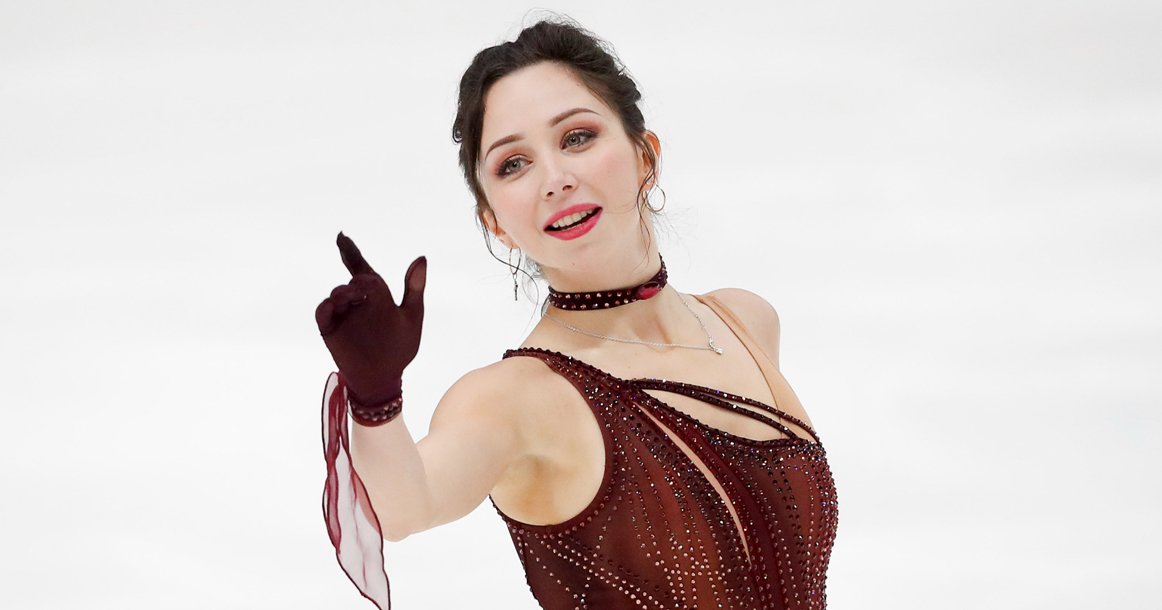
World champion Elizaveta Tuktamysheva reflected on her journey to a conscious and self-driven approach in figure skating, the evolution of her motivation, and the importance of finding inner strength and personal growth throughout her long career. Here’s a translation of her comments.
“Q: You spent 15 years in professional sports. How did your self-perception in figure skating change—from being a junior to an adult athlete?
Elizaveta Tuktamysheva: I started skating in Glazov in the early 2000s. It was a completely different time: I trained with Svetlana Mikhailovna Veretennikova, who worked within a system of pressure. I managed during training because my family supported me at home, but at training camps, when you’re with your coach all day, it became emotionally difficult – especially for a child. There was never any physical abuse, but the constant yelling and demand for results at any cost created a persistent sense of fear. That works until you get used to it, but once it stops affecting you, there’s a decline: you lose your previous motivation and need to find a new one, but it’s not always clear how to move forward.
As you get older, it’s not your attitude toward figure skating that changes, but you yourself – you become calmer, more self-aware, more confident. The last five years of my career were the most comfortable for me: I clearly understood that stepping onto the ice was my choice, that I was doing it primarily for myself, because I love figure skating. I became someone who leads the training process together with the coach, not just someone who obeys. That was a very important feeling.
Q: How did you manage to regain your motivation?
Elizaveta Tuktamysheva: At one point, Svetlana Mikhailovna left Alexei Nikolaevich Mishin’s group (I had been training with him since 2006). There was no longer someone standing behind me, controlling my every move. When that external pressure disappeared, the question arose: how do I skate now? I didn’t know how to motivate myself, because there was no one giving me the drive to work and improve every movement.
It took me about half a year to adjust. I didn’t know how to exist in the new system, since I was used to having a coach and constant control. That’s when I had to take that adult step – realizing that I had to take responsibility for myself. No one else was responsible for my performance or for each element.
Q: How has the training process in the discipline changed over the years?
Elizaveta Tuktamysheva: With the increase in the age minimum (now female singles skaters can only compete from age 17), training approaches have to change, because adults are stepping onto the ice, and it’s hard to control them through fear. Old methods simply stop working. If a person (not a child, but a 15–16-year-old teenager) can honestly answer the question, “Why do I skate? Why do I love figure skating?” – then they come to practice already motivated. In that case, no coercion is needed. That’s a more conscious approach.
Q: A career in women’s singles is often called “short,” with Russian athletes often retiring around age 20, but you competed professionally until 29. Did you ever hear that you were “too old” for the sport?
Elizaveta Tuktamysheva: Actually, never. No one ever said that to me personally, not even on social media. As a skater, I truly blossomed in the last years of my career, when I began to approach training more consciously and with love. I started to better understand what I liked: which dresses, which music, what truly moved me. My skating itself changed.
Q: Was it important for you to show other women that you can step onto the ice not only in your youth?
Elizaveta Tuktamysheva: I always liked that I was already an adult and could still compete with the younger generation, showing that it’s possible to jump consistently and skate well at any age. During competitions, girls would come up to me and say, “Liza, how do you do it? We don’t understand.” That was very valuable and important to me. Their words gave me strength to keep going and keep improving, because I saw that my example inspired someone.
Q: You had to compete with several generations of skaters at once. What was the hardest part: keeping up physically, technically, or psychologically accepting the constant change of leaders?
Elizaveta Tuktamysheva: At first, the main challenge was not to fall behind technically. But at some point, I realized that despite my consistency, I was still losing. Especially when athletes like Alexandra Trusova and Kamila Valieva, with multiple quadruple jumps, appeared at competitions. By default, I couldn’t be first in terms of points.
I accepted this quite calmly and understood that I have my own path. At some point, it becomes more important to find inner strength and do your best. If you always cling to the idea of “I must be first,” it’s very easy to give up. But when you work on being the best version of yourself, your foundation becomes much more stable. After a clean skate, you like how you look on the ice. That gives you the energy to keep going, even if you finish second, third, or fourth.”
Related topics: Elizaveta Tuktamysheva
Leave a Reply