


“The Olympics often bring out that inner greed, and it can devour you.” Reflecting on the “Olympic monster” concept, Shizuka Arakawa admitted she was almost consumed by “desire to win a medal” after finishing third in the short program
Shizuka Arakawa reflects on her Olympic journey and life beyond competitive skating
original source: news.yahoo.co.jp dd. August 6th, 2025 by Junko Nagai
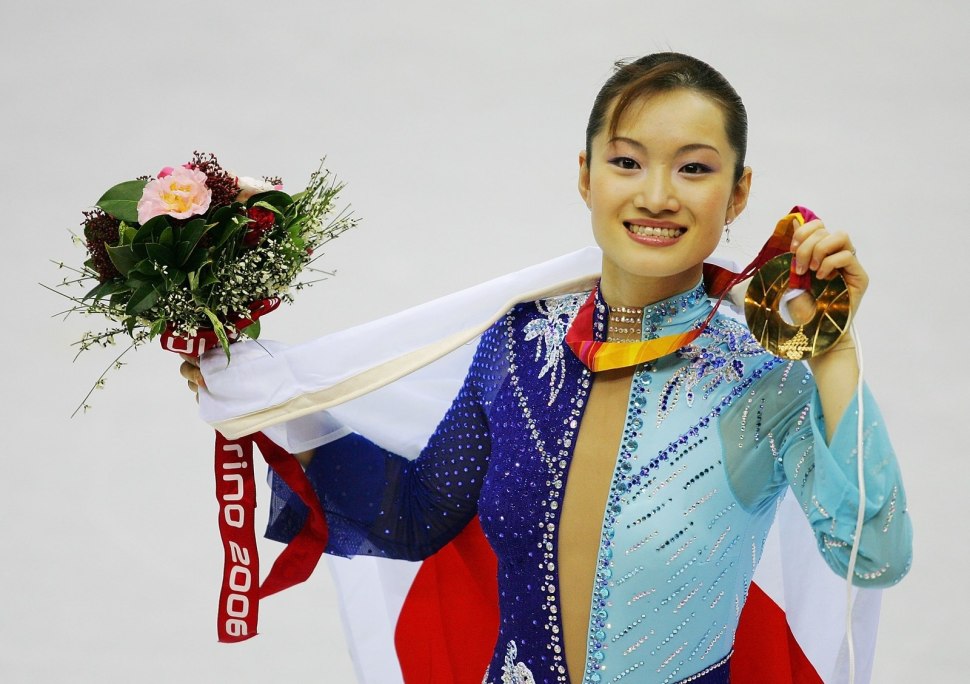
With six months remaining until next year’s Milan-Cortina Olympics, Olympic figure skating gold medalist Shizuka Arakawa reflected on her historic victory at the 2006 Turin Games and shared advice for athletes preparing for their Olympic journey. Here’s a translation of her comments.
Speaking with interviewer, Arakawa described her second Olympic experience in Turin as one filled with grueling effort:
“I remember how hard the days leading up to the Olympics were. I trained in Simsbury, Connecticut, a town surrounded by forest with no entertainment. Back then, social media didn’t exist, so my daily routine was going back and forth between the rink and home. It was such a strict, stifling lifestyle that I would sometimes cry for no reason.”
Adjusting to the newly introduced scoring system in figure skating also proved challenging.
“There were frequent rule changes, and it was a constant process of trial and error. Neither the coaches nor the skaters had a clear understanding of the scoring criteria, so every competition felt like guesswork. We revised our routines endlessly, always wondering if we’d be ready in time. Just before the Olympic season started, there was a rule change that extended the program time by 10 seconds, forcing us to quickly remake the program.”
Arakawa revealed that continuing to the Turin Olympics wasn’t her original plan, as she had intended to retire after winning the World Championships in 2004.
“When I won the World Championships, I initially thought about ending my competitive career. But with that victory, people began to expect me to compete at the next Olympics. I didn’t have a strong enough conviction to push back against those expectations, and as a result, the following season was a disappointing experience for me. After finishing ninth at the World Championships that year, I decided I wouldn’t leave skating on such a note. I resolved to face skating properly and finish my career in a way I could be proud of. During the Turin Olympic season, I vowed to live each day without regrets – no matter how difficult it was – and to end my competitive life on a high note.”
In an unusual move, Arakawa changed coaches just two months before the Turin Games. She explained:
“Nikolai Morozov, the coach I began working with, was quick to adapt to the frequent rule changes. It was an extraordinary decision at the time, but I entered that season with the mindset that it would be my final challenge, so I was prepared to try anything without regret.”
When securing qualification for the Turin Games, Arakawa reflected on her prior Olympic experience at the 1998 Nagano Games, where she finished 13th.
“At 16, I was overwhelmed by the atmosphere of the Nagano Olympics and hadn’t prepared to fight at that level. The goal was just to compete, and I wasn’t ready to perform. After watching the final group skate, I thought, ‘I want to stand on that stage.’ That bitter experience prepared me for Turin. This time, I focused on truly enjoying the competition. I found ways to make it fun – for example, visiting the village salon to curl my hair or stopping by a café before my short program. While the Olympic atmosphere could feel overwhelming, I told myself to embrace and enjoy it.”
Reflecting on the “Olympic monster” concept, Arakawa admitted she was almost consumed by “desire” after finishing third in the short program, just 0.71 points behind the leader:
“That night, I found myself thinking, ‘I want to bring home a medal,’ and realized this was the ‘Olympic monster’ at work – the temptation of personal ambition. But I reminded myself why I came here: not for a medal, but to have a memorable fight on the ice. The Olympics often bring out that inner greed, and it can devour you. Surrounding athletes also looked unusually tense, barely sleeping. Watching them, I realized I could approach my skate more calmly.”
Skating to an Italian opera, Turandot, Arakawa delivered a flawless free skate performance, cementing her place at the top with her iconic Ina Bauer move.
“I skated with the feeling that this was my culmination. It was the first time I truly felt that I was competing at the Olympics. I showcased my individuality through the Ina Bauer, and it was genuinely fun.”
Reflecting on her Olympic victory, Arakawa emphasized knowing oneself as the key to success:
“Understanding myself allowed me to prepare effectively for the competition. I can’t focus for long periods, so I prioritized relaxation right up until the event. For example, between the short program and free skate, I took naps, drank tea with Daisuke Takahashi, who had already finished competing, and even chatted or filmed videos on the bus ride to the rink. That approach calmed me and helped me perform well.”
She advised future Olympians to see the Games as an opportunity for self-discovery:
“The Olympics are a chance to learn about yourself. That knowledge will become a valuable asset for the rest of your life. Don’t be afraid – challenge yourself freely. Think carefully about why you’re striving for the Olympics and what you need to do each day to achieve it.”
After retiring in May 2006, Arakawa fulfilled a dream she had during her competitive years: producing her own ice show, “Friends on Ice.”
“I always admired the world of ice shows during my career, and winning the Olympic gold medal gave me the confidence to bring that dream to life. I realized that holding a title like ‘champion’ was essential for making an impact in ice shows. After winning titles at the 2004 World Championships and the 2006 Turin Olympics, I transitioned into producing my own ice shows.”
Now a summer tradition, Friends on Ice celebrates its 19th year this August at the Kose Shin-Yokohama Skate Center. Featuring group performances, the show welcomes notable skaters, such as ice dance duo Kana Muramoto and Daisuke Takahashi, who will perform a piece inspired by Phantom of the Opera. Arakawa herself will play the Phantom for the first time – a challenging male role.
Arakawa also invites children to dream big by including young skaters selected through auditions, inspiring them with the magic of ice shows. Performances will take place on August 30th and 31st.
Related topics: Olympic Games, Shizuka Arakawa
I used to practice at Onyx in the Detroit area and got to see how insanely talented Shizuka was on her practice sessions. She was working with Richard Callaghan (gross) at the time. I still daydream about her unsupported Y-spiral.