


Anton Sikharulidze: “Under the current circumstances, we will meticulously review every request to change sports citizenship. It’s time to realize that Russia is not a ‘cash cow’ for other countries to exploit.”
Russia tightens athlete transfers amid controversies: Federation President Anton Sikharulidze addresses Veronica Zhilina’s Case and Future Policies.
original source: RSport dd. July 28th 2025 by Boris Khodoroskii
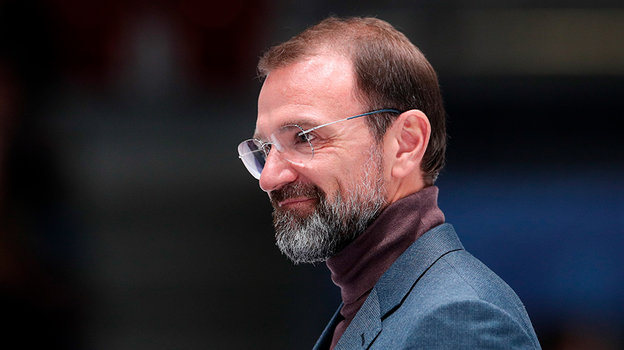
Anton Sikharulidze, President of the Russian Figure Skating Federation (FFKKR), spoke to RIA Novosti Sport about the current state of athlete transfers from Russia to other countries, the evolving policies on citizenship changes, and the controversy surrounding 17-year-old skater Veronica Zhilina’s attempt to compete under the Azerbaijani flag. Sikharulidze outlined why Russia is no longer willing to be a “supplier” of figure skaters, adding that strict measures are now in place to safeguard the federation’s interests. Here’s a translation.
“Q: How are Russian skaters’ transfers to other national federations currently regulated?
“For decades, the Russian Figure Skating Federation has effectively served as a donor to other federations. You only need to look at the list of participants at World and European Championships to see this,” Sikharulidze began. “Russian is frequently heard in the kiss-and-cry, even though our skaters are banned from international competitions.”
He indicated that some skaters who have never competed at domestic Russian events change citizenship and move abroad with their families for lifestyle reasons, and these cases are seen as “fair.”
“We never raise issues with such transfers. These are honest cases.”
Sikharulidze highlighted that Rule 109 of the ISU regulations specifies clear criteria for athletes who have achieved international success to change their sports citizenship.
“To compete for another country, a skater must reside there for at least a year or hold full citizenship. The ISU is not interested in allowing any country to assemble a team of Russian skaters using its resources and taking advantage of the current circumstances. ISU rules explicitly call mass athlete transfers ‘export of athletes’ and strongly discourage such practices.”
Q: Have sanctions against Russian skaters impacted citizenship changes?
“We have now entered the fourth season where Russian skaters cannot compete internationally. These sanctions are blatantly illegal, but this is our reality,” Sikharulidze explained.
Despite the situation, FFKKR has made efforts to maintain partnerships with other federations and allowed transfers as long as they adhered to existing rules.
“However, the possibility of Russia’s full return to international competitions remains uncertain. Meanwhile, rhetoric from some federations grows more aggressive. Under these conditions, we are carefully examining every citizenship change request.”
“We have helped many and continue to do so. However, now, when even our junior skaters are banned from participating in international competitions, our partners are not making significant efforts to facilitate our return. Under the current circumstances, we will meticulously review every request to change sports citizenship. While we previously approached this matter with a fairly lenient attitude, the situation now compels us to make strict decisions in the interest of Russian figure skating.
It’s time to realize that Russia is not a ‘cash cow’ for other countries to exploit. We welcome genuine partnerships.”
Q: Does the FFKKR align with ISU on citizenship transfer policies?
“Our federation works closely with the ISU. Just recently, General Director Alexander Kogan and I participated in the ISU Congress in Lausanne, where we met with ISU leaders,” Sikharulidze said, emphasizing that the ISU shares their stance.
“The ISU is not interested in turning World and European Championships – or even the Olympics – into Open Russian Championships by allowing a massive influx of our skaters under other flags.”
The ISU has also reaffirmed that the FFKKR is the only organization in Russia authorized to manage figure skating development, granting exclusive trust and support to the federation. Sikharulidze noted:
“It’s gratifying that ISU leadership and colleagues praised the exceptional organization of Russian tournaments and our innovative competition formats designed to engage interest in figure skating.”
Q: What about skaters who change citizenship but continue training in Russia?
“We are aware of these cases. On one hand, it’s good that Russian coaches’ students are still competing internationally. But we need to clarify the terms under which their preparation occurs in Russia – who pays for ice time, coaching, choreography, and the use of facilities? These infrastructures were created using federal or regional budgets, and we cannot ignore this reality,” Sikharulidze stated.
Q: why was Veronica Zhilina’s transfer to Azerbaijan denied?
Sikharulidze provided key insights into the decision: “We based our decision on Rule 109 of the ISU regulations, FFKKR rules, and, most importantly, the interests of Russian figure skating.”
He explained that Zhilina had only visited Azerbaijan twice in her life, spending less than three days there: “The residency requirement of living in the new country for a year does not apply to her. As for obtaining new citizenship, the answer is no. Russian law requires citizens who acquire a second nationality to notify the Ministry of Internal Affairs within 60 days, or they risk criminal liability. No such notification was made by Zhilina.”
Additionally, FFKKR records showed that Zhilina had been a part of Russia’s extended national team for years, receiving funding for training camps, costumes, and choreography.
“She signed her last contract with the federation in January 2025. Throughout this time, both she and her coach received financial support, yet we encountered several incidents where she withdrew from Grand Prix stages shortly before competitions, despite health certificates indicating she was fit to participate,” Sikharulidze added.
Q: Did Zhilina repay the Federation?
“I must stress that the federation never demanded repayment from Zhilina or her representatives,” Sikharulidze clarified. He noted that some funds were voluntarily returned with the label ‘mistakenly paid,’ but this occurred a day after the FFKKR executive committee unanimously denied her citizenship change request.
“This story wasn’t about money. It’s about principle,” he emphasized.
Q: Could a monetary transfer solve such cases?
“Russia does not ‘sell’ its figure skaters,” Sikharulidze stated unequivocally.
However, he mentioned that the FFKKR is considering establishing transfer fees for citizenship changes to account for training costs and potential lost opportunities. “Imagine if a skater trained fully in Russia became a European, World, or Olympic champion under another country’s flag just months after switching citizenship. Such cases need proper evaluation.”
He confirmed that the FFKKR will review citizenship requests again in May 2026 but will not consider any earlier proposals.
Q: What’s next for Zhilina and her coach Evgeni Plushenko?
“Zhilina should stop listening to those who offer bad advice. She should compete for Russia. We are ready to speak with her anytime to resolve this matter. Zhilina is a talented athlete who could be a leading figure in our national team for years to come,” Sikharulidze said.
Regarding his personal relationship with her coach, Evgeni Plushenko, Sikharulidze stated: “From the start, I explained FFKKR’s position to Evgeni Viktorovich based on legal documents. Plushenko has wisely refrained from publicly commenting on this matter. I trust he will take steps that align with the interests of Russian figure skating and, by extension, his own.”
Related topics: Anton Sikharulidze, Evgeni Plushenko, Veronika Zhilina
Leave a Reply