


Wakaba Higuchi: “I was a junior in university at the time of the Beijing Olympics, and I had decided that if I didn’t make it to the Olympics, I would quit right then and get a job. That’s why while fighting through the qualifiers, I was also going to alumni networking visits and job interviews.”
Following her retirement in March 2026 after a 22-year competitive career, figure skater Wakaba Higuchi enrolled in graduate school to study sports psychology, aiming to research coach-athlete relationships and overcome her lifelong complex about missing out on normal student experiences.
original source: news.yahoo.co.jp dd. 22d September 2026
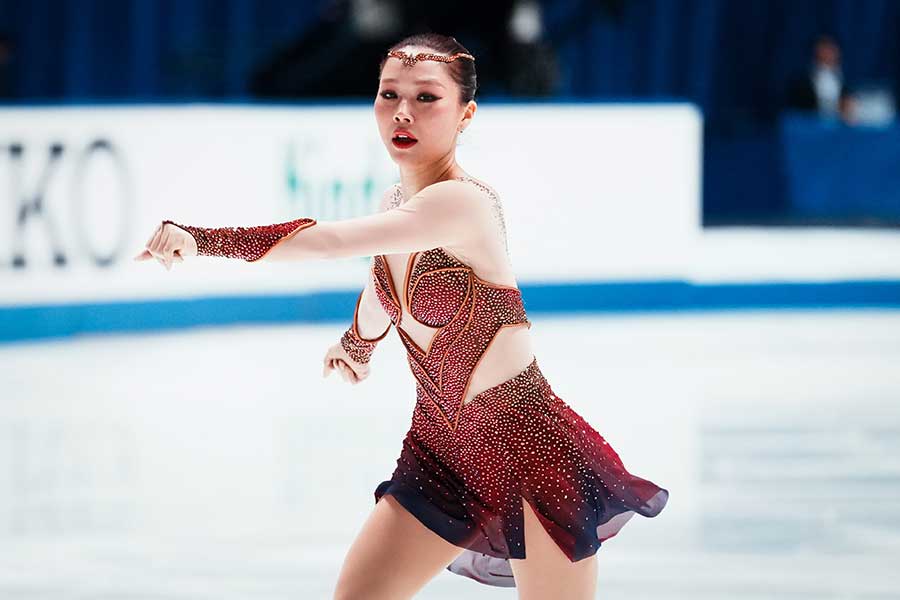
Having concluded a 22-year competitive career, figure skater Wakaba Higuchi chose to enter graduate school upon retiring. Why study sports psychology? In the first part of this interview, she shares the thoughts behind her decision. Here’s a translation of her comments.
In March 2026, Wakaba Higuchi closed the chapter on a 22-year competitive career. A 2018 World Championship silver medalist and 5th-place finisher at the 2022 Beijing Olympics, Higuchi remained at the forefront as a representative figure skater for Japan. Yet, her new stage after retirement is graduate school.
Currently, Higuchi continues her work as a professional skater through ice shows, choreography, and coaching younger skaters, while entering grad school this spring to study sports psychology.
“There is so much learning where I get to cross-examine my own competitive experiences – such as realizing, ‘Ah, so that’s what my state of mind was back then.’ As I acquire knowledge, I’m currently realizing how useful it is when teaching others.”
She began considering graduate school during her final one to two years as an active competitor. While battling through the season, she contacted professors, drafted research plans, and prepared for entrance exams. Balancing competition and exams was by no means easy, but she pushed through thanks to a specific conviction.
“I have lived my life solely for figure skating since I was a little child. Put simply, I hardly did anything else. I know nothing of studying, chatting aimlessly with friends after school, and all the things everyone is supposed to experience as a matter of course. That gradually became something like a complex inside me.
That’s why first, I simply wanted to study properly like anyone else. And since it’s an opportunity, I decided to study sports psychology so I could make use of everything I’ve experienced.”
Coaches, staff, and reporters who know her competitive record well—up until now, she has always interacted with people through the lens of “figure skater Wakaba Higuchi.” In graduate school, however, there are naturally people who do not know about her athletic career. Finding it fresh and interesting to view her own athletic life objectively as if it were a textbook and engaging in discussions with other students, she shares:
“I’ve never interacted with people from sports other than skating before, so gathering with people from various sports backgrounds and hearing them say, ‘In our sport, it was like this,’ teaches me that different sports have all sorts of tendencies and mindsets.
Among the students, there are also those with no sports experience, and I’m getting to meet them from scratch, saying ‘Nice to meet you.’ Until now, I was always viewed as an ‘athlete,’ so those pure first-time meetings are very refreshing, and being able to talk to anyone on a flat, equal footing is a lot of fun.”
Her current research theme is: “How the relationship between coach and athlete affects performance.” Through surveys and interviews with both athletes and coaches across various sports, she is exploring better coaching methods. Needless to say, this theme is deeply informed by her own experiences.
“My coach wasn’t the type to tell me meticulously, ‘Do this, practice that.’ They were the type to say, ‘Think for yourself about what you should do.’ So, when I specifically asked, ‘I think it’s like this, what should I do?’, they would finally teach me. Looking at myself objectively and thinking for myself – I believe that coaching method helped me build those skills.
But perhaps that was just for me, and they prepared a different coaching method for someone else. Coaching truly differs from person to person; you can’t flatly say that strict coaching is always good, nor is just being gentle right. There must be a way of interacting that suits each individual athlete. I want to be able to articulate those differences further.”
The retirement age for figure skating athletes is said to be around 24, and Higuchi herself stepped into a new career at 25. Because figure skating sees an earlier peak and an earlier retirement than many other sports, Higuchi feels there are unique challenges regarding second careers.
“Most skaters retire as university seniors and get a job. Those who want to continue skating after that either become professional skaters, perform in shows overseas, or become coaches. For so-called top athletes, even though it’s a thorny path, such a future exists; conversely, those who couldn’t achieve results during their athlete days can make a clean-cut decision: ‘Once I graduate college, I’ll quit skating and become a working professional.’
But the difficult part is the mid-tier skaters. They think, ‘I might still be able to do it, I might be able to go higher,’ while simultaneously struggling with doubts: ‘Maybe I’ve already hit my limit.’ People around them might tell them, ‘Keep trying!’ but I wonder if that’s truly considering that person’s best interests. Then, if results don’t follow, what should they do? Those kinds of questions exist too.
I think it would be great if figure skating had something like corporate sports teams found in other sports – a safety net where you can continue competing as a company employee, or work at that company after retirement.”
While continuing in competitive skating requires massive expenses, the systems to systematically support post-retirement careers cannot yet be called sufficient. As a result, many athletes struggle to envision a clear second career.
“In my case, I was a junior in university at the time of the Beijing Olympics, and I had decided that if I didn’t make it to the Olympics, I would quit right then and get a job. That’s why while fighting through the qualifiers, I was also going to alumni networking visits and job interviews.
However, as a result, I was able to make it to the Beijing Olympics, and once that happened, I figured I had no choice but to bet everything and rededicate myself to skating. I decided I would think about the future once I reached wherever that path took me. But deciding the timing of retirement is, for some people, truly difficult. Making the resolution to stop a challenge that you’ve staked your entire life on is simply not something you can do easily.”
Higuchi herself resolved to make the following season her final one in competitive skating, following the 2025 World Championships, which served as the qualifier for the Milano-Cortina Winter Olympics.
“I aimed for the Milano-Cortina Olympics, but midway through the Nationals, the situation made securing an Olympic spot difficult, and I lost my goal. Even so, the competitions continued, and I found myself feeling hazy, wondering, ‘Why do I have to try so hard?’ At that point, I talked with my coach and shifted my goal to ‘delivering the ultimate performance until the very end.'”
Her posture of lying down on the ice after finishing her final performance at All-Japan left a lasting impression.
“At that time, my foot was in pain, and until two days prior, I couldn’t even jump. But on the final day, I delivered a better performance in my mind than in any practice, and I felt, ‘I somehow managed to hold on.’ I lay down on the ice with the feeling: ‘I could never skate a better performance than that, it’s over now.'”
Related topics: Wakaba Higuchi
Leave a Reply