


Tamara Moskvina: “If you want to be a champion, learn self-control and sacrifice pleasure for the sake of results”
An Interview with Tamara Moskvina: 50 Years of Excellence in Pair Skating
original source: SobakaRU by Daria Skayanskaya
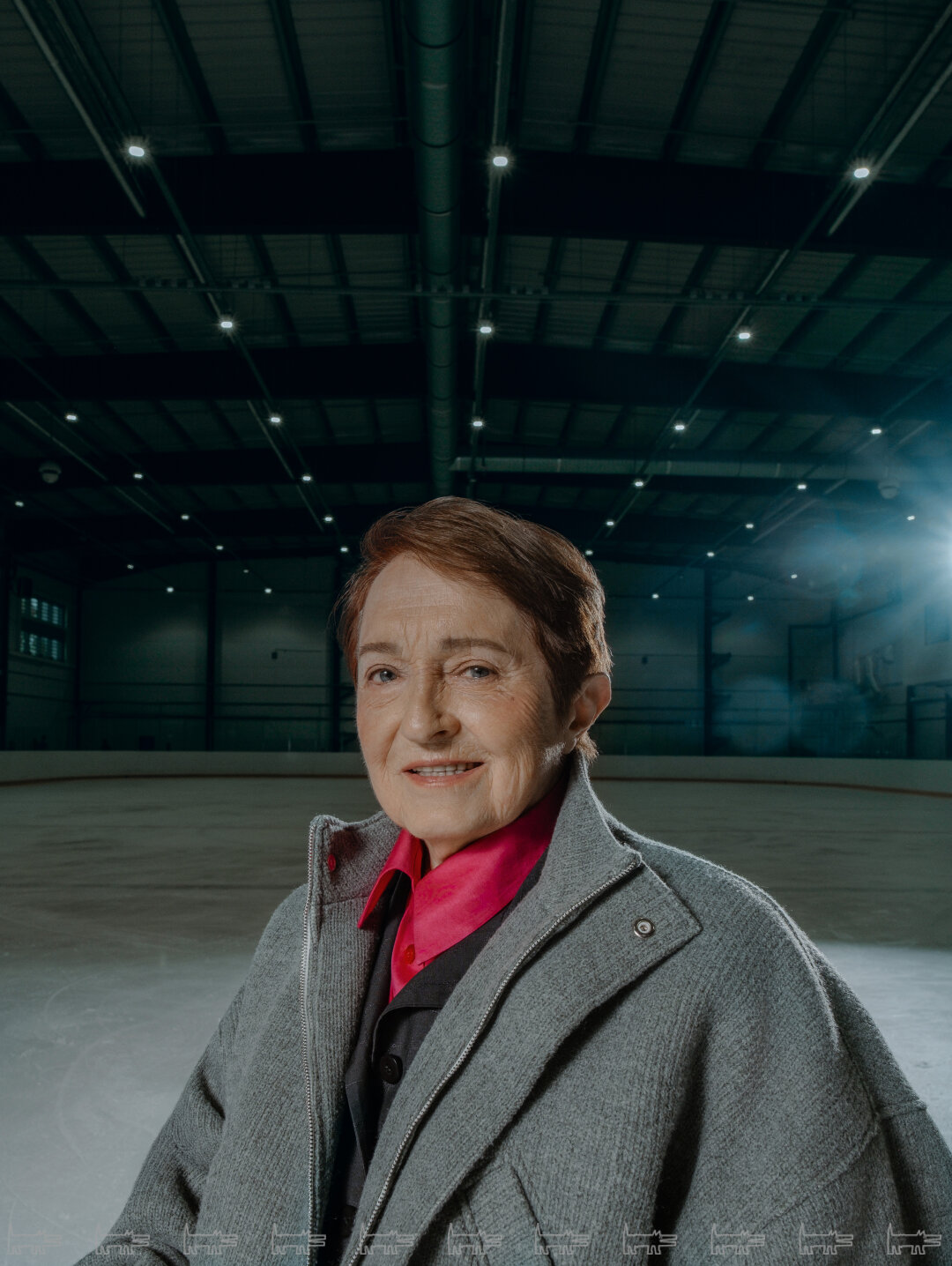
Tamara Moskvina, one of the most successful coaches in pair skating history, has cultivated four pairs of Olympic champions and helped her athletes earn 66 medals at major international competitions. In this candid conversation, Moskvina reflects on her unparalleled career, her philosophies around coaching, and her outlook on figure skating’s future. Here’s a translation.
“Q: How have your athletes dominated podiums for 50 years?
Tamara Moskvina: These aren’t my athletes – they belong to our school, our supporters, and our country. Medals belong solely to those who earn them. As a coach, my job is clear: to ensure the skaters we work with grow quickly, achieve high rankings, and delight experts and audiences with their skill.
Q: How would you describe yourself as a coach in one word?
Tamara Moskvina: Smart.
Q: And how would your students describe you?
Tamara Moskvina: Persistent.
Q: What qualities make a champion?
Tamara Moskvina: Hard work, discipline, good health, and the willingness to sacrifice personal pleasures to achieve your goals. These must be paired with self-demand, composure, and the ability to handle stress. Champions must control their reactions in difficult situations. For example, it was heartbreaking when I made a jump error at the 1968 Grenoble Olympics with my partner Alexei Mishin, and we finished fifth when we had the potential to rank higher. But what could I do? I accepted the mistake, owned it, and the following year we became vice world champions. There’s also that elusive element: luck. Some athletes have it, and some don’t. It’s something you can’t control.
Q: Many experts advocate for out-of-the-box thinking. Does it apply to skating?
Tamara Moskvina: Absolutely! It’s a crucial skill for skaters too. Athletes who can approach an element from a fresh perspective – adjusting details like positioning or creating unique moves – add significant value to their performances.
Q: You’re credited with creating the legendary “Biellmann spin,” performed by holding one foot overhead with both hands. How did it originate?
Tamara Moskvina: While studying physical culture at Lesgaft Institute, I saw gymnasts performing a move and thought, ‘I could try that on ice!’ And I did – in 1957. But at the time, I was just a girl placing in the twenties at European Championships, so the move didn’t garner much attention. Years later, European champion Denise Biellmann executed it beautifully, with impressive technical precision thanks to her acrobatic training. The move gained international recognition and became known as the Biellmann spin.
Q: Did you ever feel tempted to claim authorship?
Tamara Moskvina: When Denise revealed that her coach suggested replicating the element performed by ‘a Russian girl,’ I felt no jealousy. I simply enjoyed skating! Back then, making claims about authorship wasn’t customary.
Q: Modern athletes might dispute ownership if such situations arose today. Was Soviet sport different from Russian sport in terms of PR?
Tamara Moskvina: There’s no division between ‘Soviet’ and ‘Russian’ sport – it’s one continuous pursuit of excellence in high-performance athletics. Of course, back then, major events were only shown on tiny TV sets like the KVN-49 or covered by a few newspapers. Today, competitions are widely broadcast, accompanied by extensive advertising. These new conditions require us to present skaters and their programs strategically – to engage spectators and experts amidst fierce competition. Costume design, music choices, and captivating performances matter. However, even the most extraordinary presentation won’t work without polished skills.
Q: American coach Tim Notke famously said, ‘Hard work beats talent if talent doesn’t work hard.’ Do you agree?
Tamara Moskvina: Certainly! A dedicated coach’s first priority, across all eras, is to develop strong athletes and present them effectively to judges and audiences.
Q: The media often sensationalizes athlete-coach separations. Is it always dramatic when a skater changes coaches?
Tamara Moskvina: Not at all – it’s pure nonsense. I have a saying: ‘If an athlete comes to you, they will leave you one day – 100% guaranteed.’ They might retire, focus on their health, or switch to another coach. A skater leaving doesn’t mean the previous coach was incompetent, nor does it mean the athlete was rude. If the partnership doesn’t benefit both sides or yield results, parting ways is the logical solution. I’ve had skaters come to me from other coaches, and I’ve had students leave me – it’s perfectly normal.
Q: How did you begin your journey in skating?
Tamara Moskvina: In fourth grade, I was seated next to a ‘troublemaker’ to help reform her behavior. She shared that she was a figure skater, and her story intrigued me. I asked her coach if I could visit a practice, and soon after, I joined the skating program at the Burevestnik Sports Society.
From my first coach, Ivan Ivanovich Bogoyavlensky, and my second mentor, Igor Borisovich Moskvin, I learned crucial skills that later shaped my coaching. They taught me how to connect with people and instill a lasting love for the sport.
Q: What do you consider your greatest victory?
Tamara Moskvina: Victory is about enjoying the process of learning something new. For example, I relished combining skating with school and university studies. I graduated from school with a silver medal and earned a honors diploma from university. That thrill of juggling everything successfully – that’s my greatest joy.
Q: What challenge was the hardest (and most rewarding) for you?
Tamara Moskvina: Mental composure was a struggle for years. I trained diligently, but when competition day arrived, my thoughts would cloud. I never competed without mistakes, which today would qualify me as a ‘minus start’ skater. USSR Figure Skating Federation opted to send younger athletes to World Championships instead of me, reasoning, ‘Let the youth gain experience.’ At the time, it stung, but now, as a coach, I understand their decision. Determined to control my nerves, I studied self-regulation techniques and eventually mastered my mental game. Since then, I’ve competed flawlessly. I still use those methods today.
Q: What keeps you grounded when you step onto the ice?
Tamara Moskvina: I remind myself, ‘Tamara, your athletes are skating – no one is watching you. Your job is done; your place is in the background.’ It keeps me calm so I can support and guide my students.
Q: Your appearance at age 83 with a solo program at ice rink opening — how do you stay so active?
Tamara Moskvina: Stay positive – it’s a choice. Face challenges head-on, maintain a steady routine, and pursue what you love. That’s all there is to it!
Q: The routines you described – work based on self-discipline – must require sacrifices!
Tamara Moskvina: Discipline is the key – though some might think of it as an unpleasant word. I owe it to my father. He taught me and my sisters from a young age to help out at home, instilling a sense of household discipline. Then came school, which taught me educational discipline. And figure skating instilled athletic discipline. I learned to come to every practice with genuine interest, to complete exercises even if they weren’t perfect at first, to stick to a daily routine, and to control my emotions both during and after competitions. Discipline, in essence, is the rules of life; if you follow them, work becomes easier.
Q: How do you prepare yourself for the day?
Tamara Moskvina: When I wake up and get out of bed, I run my hand over my face – it’s my symbolic gesture, almost like ‘putting on’ a smile (as we’ve discussed, a good mood is entirely our personal choice!). After that, I turn on RBC News.
Q: What do you do when the day doesn’t go well, or when fairness ‘leaves the chat,’ like on May 13 when the International Skating Union (ISU) banned your students, the 2021 world champions Anastasia Mishina and Aleksandr Galliamov, from the Olympic qualification competition?
Tamara Moskvina: I anticipated this scenario after reading ISU communiqués on the rules for participation in competitions and the Olympics. The decision made by the ISU was one of the most unfavorable outcomes we considered, but we were prepared for it. That’s why we don’t waste time on grievances – we focus on continuing to improve our mastery in the sport.
Q: How do you stay positive when a tough period seems to drag on?
Tamara Moskvina: Immerse yourself in nature, art, and draw inspiration from others. During my student years, I spent evenings under the ceiling of the Kirov Theater, now the Mariinsky Theater – I would buy tickets for the very top tier for three rubles and watch ballet performances. I read many works by world-class literary figures, compared myself to people who faced real challenges, and admired how they never gave up and kept holding their heads high. Life is beautiful and amazing, and you must find what will guide, inspire, and support you!
Q: What lies ahead for figure skating?
Tamara Moskvina: A revival! Modern, high-quality rinks are being built across various cities in the country. Numerous competitions are being held – from city-level to federal-level events – for athletes of all ages: children, juniors, and even adults. There’s hope that once Olympic quotas are determined, Russian figure skaters will compete at the Games, perhaps with just one athlete in singles. The time is coming when our athletes will return to the international stage. Maybe my words are overly optimistic, but that’s who I am -I always see the glass as ‘half full,’ and that drives all of my endeavors.”
Related topics: Tamara Moskvina
Leave a Reply