


Alexandra Trusova: “When I skated under Evgeni Plushenko, I got the feeling that I was better than others. I don’t have that now.”
Alexandra Trusova opened up about how she coped with her growing popularity.
original source: Forbes
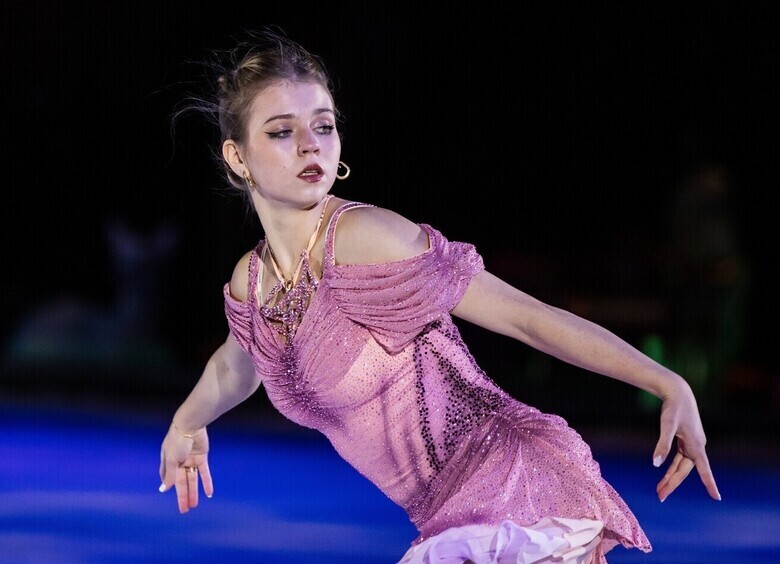
Alexandra Trusova reflects on her early career motivations, managing fame from a young age, and admitting she experienced “star disease” and a sense of entitlement around age 16 while training under Evgeni Plushenko. Here’s a translation of her comments.
“Q: You started figure skating at four years old, and today you are 22. Quite quickly, you became one of the most famous figure skaters of your generation. Looking back at the entire journey now, what was most important to you?
Alexandra Trusova: It’s hard for me to judge because I didn’t have any other life. Like an ordinary child, at first I simply listened to my parents and coaches. I had ice and recovery, and the next day training again. Only around age 11 or 12 did I realize for myself why I needed this: I wanted to win the Olympic Games and started working toward it.
Yes, titles, popularity, and money were all important to me. From the age of seven, my dad paid me for my performances. I remember seeing an iPhone he had and saying I wanted one too. He offered: “Then I’ll pay you prize money.” So from that moment on, I understood what I needed to do to get paid.
Until I was 17, I wanted to achieve fame and earn good money. By that age, I had gotten virtually everything I wanted except the main thing – Olympic gold.
Q: You achieved widespread fame early on, while still a teenager. How did that affect your growing up?
Alexandra Trusova: Until the end of the Olympics, around age 18, my social media was almost completely restricted – I could be on it for a maximum of one minute a day. I could post something from my mom’s phone, but I had no opportunity to read what was written about me or even understand from the internet just how popular I was.
At the same time, people started recognizing me on the street around age 13. Regardless of what color my hair was – first I dyed it red, then blonde, then returned to light brown – people recognized me anyway. Once someone recognized me wearing a hat and a mask, just by my eyes. That was before the Olympics, when I was about 16.
So, of course, I felt that people were interested in me. But my parents and coaches tried to stifle that feeling in me so I wouldn’t get “star disease” [an inflated ego]. Although looking back now, I think that at age 16 I did have it after all. When I skated under Evgeni Plushenko, I got the feeling that I was better than others. I don’t have that now.
Q: Do you mean you considered yourself better than other athletes? Or rather felt special: that you were allowed to do more because people knew you and you had a large audience?
Alexandra Trusova: Rather, I felt special. It felt like I was allowed to do more than others in certain moments. I skated alongside kids younger than me, and sometimes I could behave improperly toward them. I can’t cite a specific instance right now, but sometimes that feeling affected me.”
Related topics: Alexandra Trusova
Leave a Reply